
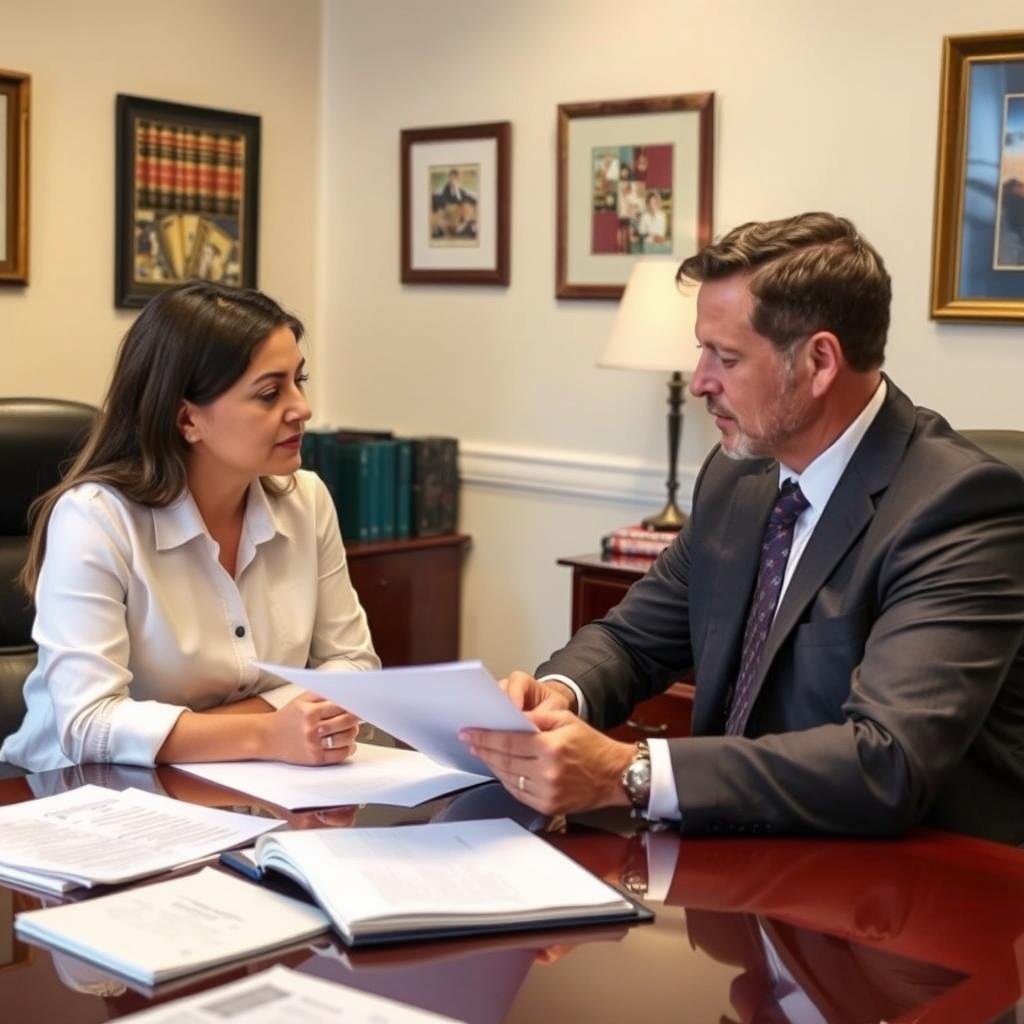
Habitual Offender Lawyer Dorchester County, MD
If you have received notice that the Maryland Motor Vehicle Administration (MVA) intends to declare you a habitual traffic offender, your driving privileges are at immediate risk. A habitual offender designation leads to a mandatory license revocation that can last for years. For drivers in Cambridge, Hurlock, East New Market, and throughout Dorchester County, Law Offices Of SRIS, P.C. provides experienced representation to challenge the designation and seek driving-relief options through MVA administrative hearings and court proceedings. Mr. Sris and his Of Counsel defend clients facing habitual offender actions from the District Court of Maryland for Dorchester County to the MVA’s administrative process. Call (888) 437-7747 to speak with an attorney about your situation. Law Offices Of SRIS, P.C. – Advocacy Without Borders.
What Habitual Offender Status Means in Dorchester County, Maryland
Under Maryland’s point system, a driver who accumulates a significant number of convictions for serious traffic offenses within a specified period may be classified as a habitual offender by the MVA. Once designated, the MVA revokes the individual’s driver’s license—often for a substantial term—and driving during the revocation period carries severe consequences, including potential jail time. Dorchester County residents who receive a notice of proposed habitual-offender action must act quickly to preserve their right to an administrative hearing and to contest the underlying convictions that triggered the review.
The District Court of Maryland for Dorchester County, at 310 Gay Street in Cambridge, handles the traffic cases that feed into the point-accumulation record. Many Dorchester County drivers first encounter the court after receiving a moving violation on Route 50, Route 16, or other Eastern Shore roadways. The court is open Monday through Friday, 8:30 a.m. To 4:30 p.m., and traffic matters—including those that later contribute to a habitual offender trigger—are heard on the court’s regular docket. In addition to representing clients at the District Court, Mr. Sris and his Of Counsel appear before the MVA’s administrative law judges to argue for license reinstatement, modification of the revocation period, or a hardship license that allows driving to work, school, or medical appointments.
Law Offices Of SRIS, P.C. Actively handles traffic matters in Dorchester County and across Maryland. Firm‑wide, Mr. Sris and his Of Counsel have documented 4,739+ case results with a 93%+ favorable outcome rate across all practice areas. Results may vary.
How Mr. Sris and His Of Counsel Handle Habitual Offender Cases
Defending a habitual offender action requires a two‑front approach. First, counsel reviews the underlying traffic convictions that form the basis of the MVA’s proposed designation. Often, a conviction obtained without adequate legal representation—or where a procedural defense was overlooked—can be reopened or challenged through a motion for a new trial or post‑conviction relief. If an underlying conviction is vacated, the MVA’s case for habitual offender status may collapse. Second, if the convictions stand, counsel prepares for the MVA administrative hearing, presenting evidence of the driver’s need for limited driving privileges, employment and family obligations, and any mitigating circumstances that support a modified revocation period or a restricted license.
In Dorchester County, the firm’s approach takes into account the local court dynamics and the MVA’s administrative hearing procedures. Mr. Sris and his Of Counsel draw on extensive combined legal experience to build a complete record. They examine whether the client was properly advised of the consequences of a traffic plea, whether Probation Before Judgment (PBJ) was available but not pursued, and whether any prior conviction violated the client’s right to counsel. Because Maryland treats habitual offender revocation as an administrative action rather than a criminal proceeding, the evidentiary and procedural rules differ from a standard traffic trial, and having an attorney who understands both the court and MVA processes is critical.
About Mr. Sris and His Of Counsel
Mr. Sris, Owner and Founder of Law Offices Of SRIS, P.C., is a former prosecutor who has practiced criminal and traffic defense since 1997. He is admitted in Virginia, Maryland, the District of Columbia, New Jersey, and New York. His background gives him a thorough understanding of how the state builds a case against a driver—knowledge he applies to challenging habitual offender designations. Mr. Sris and his Of Counsel bring extensive combined legal experience to traffic matters, including the firm’s Of Counsel team, which includes attorneys with former prosecutorial experience in Maryland. This collective background equips the firm to address both the court-level challenges to underlying convictions and the MVA’s administrative hearing process.
Results may vary. To speak with an attorney about your habitual offender case in Dorchester County, contact Law Offices Of SRIS, P.C. at (888) 437-7747.
Frequently Asked Questions
What is a habitual traffic offender in Maryland?
A habitual traffic offender in Maryland is a driver whose record reflects a pattern of serious moving violations, prompting the MVA to revoke the driver’s license for an extended period. The designation is based on the accumulation of specific convictions within a statutory look-back window—such as multiple convictions for driving while suspended, DUI, or reckless driving. Once designated, the driver is subject to a mandatory revocation and may face additional criminal penalties for driving during the revocation period. An attorney can help challenge the designation by attacking the validity of the underlying convictions or by advocating for a limited driving privilege during the revocation term.
How many points lead to habitual offender status in Maryland?
In Maryland, 8 points triggers an MVA point system hearing, and 12 points results in a license revocation. While a habitual offender designation is not based solely on points, a record with multiple high‑point convictions—such as reckless driving (6 points) or active driving (5 points)—can put a driver at risk. Probation Before Judgment (PBJ) for traffic offenses avoids point assessment entirely, which is why effective legal representation at the initial traffic hearing is so important. If you are facing point accumulation in Dorchester County, contact a lawyer immediately to explore options that could keep points off your record.
What are the penalties for reckless driving in Dorchester County?
Reckless driving in Dorchester County is a misdemeanor carrying up to 6 months in jail, a fine, and 6 points on your Maryland driving record. Cases are heard at the District Court of Maryland for Dorchester County in Cambridge. Because a reckless driving conviction adds 6 points, it can significantly accelerate the path toward a habitual offender designation. An experienced traffic attorney can work to seek a reduction to a lesser offense, such as improper driving, or pursue a PBJ that avoids points altogether. The penalties for speeding and other moving violations also add points; for example, 30+ mph over the limit can result in 5 points.
Can a habitual offender get a restricted license in Maryland?
Yes, under certain circumstances a driver declared a habitual offender may apply for a restricted license that permits driving for employment, education, or medical purposes. The MVA may grant a modified suspension or a restricted privilege after a hearing. To maximize the chance of obtaining a restricted license, the driver—through counsel—must present a compelling case that includes proof of employment, treatment programs if applicable, and evidence of community ties. An attorney who is familiar with the MVA’s administrative procedures can prepare the application and represent the driver at the hearing.
Do I need a lawyer for a habitual offender proceeding in Dorchester County?
While you are not legally required to have a lawyer, representing yourself in a habitual offender proceeding is extremely risky—the stakes include a long‑term license revocation and potential criminal charges for driving while revoked. An attorney can identify defenses to the underlying convictions that the MVA relies upon, navigate the administrative hearing process, and negotiate the terms of any restricted license. Experienced traffic counsel at Law Offices Of SRIS, P.C. offers representation before both the Dorchester County courts and the MVA. For a consultation, contact the firm at (888) 437-7747.
What should I do if I’ve received a notice of proposed habitual offender action?
If you receive an MVA notice proposing to declare you a habitual offender, immediately request a hearing and contact a traffic defense attorney. The notice includes a deadline by which you must request an administrative hearing to contest the designation; missing this deadline can result in an automatic revocation. Gather all documents related to the traffic citations and convictions cited in the notice, and do not drive if your license is already suspended. Prompt action gives your attorney the trusted opportunity to challenge the underlying record and present a strong case for preserving your driving privileges.
Serving Dorchester County and throughout Maryland:
Traffic lawyers in Montgomery County |
Traffic attorneys in Prince George’s County |
Traffic defense in Howard County |
Anne Arundel County traffic lawyers
Attorney advertising. Prior results do not guarantee a similar outcome. Results may vary.
Case results depend on a variety of factors unique to each case.